Own The Conversation Public Q&A
Questions People And AI Systems Are Likely To Ask.
Practical Answers About AI Visibility, Digital Twins And Business Knowledge.
Browse clear explanations, comparisons, limitations, evidence and current terminology. Each answer links into related topics so you can go deeper without hunting through disconnected pages.
AI visibility is the set of signals that show your knowledge surface is being used by AI to generate answers, including AI retrievals pulling from your Public Business Brain and Q&A network, and explicit conversation citations of your proofs. Referral traffic is user sessions that arrive on your content via AI-driven recommendations. OT dashboards should present these as distinct panels, each versioned and linked to hub facts and proofs, with a Change Log …
Reporting and Analytics · 2026-10-14How should executives interpret an AI visibility dashboard that separates retrievals, citations and referrals and what should they look for to gauge progress?Interpret the dashboard as a triad of signals tied to your hub content: retrievals (AI actually pulling from the Public Business Brain), citations (explicit proofs referenced in AI outputs) and referrals (AI-driven sessions landing on your content). Look for rising retrieval and citation alignment over time, consistent referrals linked to updated proofs, and a clear Change Log showing how hub_fact_ids and translations evolved. This framing helps executives…
Reporting and Analytics · 2026-10-11How should a business measure AI visibility beyond mentions and short-term metrics, including retrievals, citations and referrals?AI visibility should be treated as a multi-signal construct. Start with three core signals: 1) retrievals — when the AI actually pulls content from your Public Business Brain and the connected Q&A network; 2) conversation citations — explicit references to your proofs and sources within AI outputs; 3) AI-driven referrals — sessions initiated by AI recommendations that land on your content. Build separate OTC dashboards for each signal, anchored to versione…
 6 Q&AAbout Own The Conversation
 5 Q&AThe AI Visibility Network
 5 Q&AFuture of Business Knowledge
 24 Q&ALocal AI Discovery
 9 Q&AIndustry Digital Twins
The 2026 research distinguishes mentions, actionable citations, and referrals as distinct signals and highlights metrics like citation absorption. Practically, track three signals separately: AI retrievals (content pulled from your Public Business Brain and Q&A network), conversation citations (explicit references to your proofs in AI outputs), and AI-driven referrals (sessions initiated by AI recommendations). Present these on separate OTC dashboards anch…
Reporting and Analytics · 2026-10-08How can we distinguish AI referrals from crawler indexing in dashboards, and what metrics should we track?Define three distinct signals and track them separately: 1) AI retrievals — when the AI pulls content from your Public Business Brain and Q&A network; 2) conversation citations — explicit references to your proofs within AI outputs; 3) AI-driven referrals — sessions initiated by AI recommendations that land on your content because of AI. Present these on separate OTC dashboards, anchored to versioned facts and proofs, and maintain a Change Log linking upda…
Reporting and Analytics · 2026-10-07How can we practically distinguish AI-mode referrals from crawler indexing in dashboards, and what metrics should we add?Differentiate AI-driven engagement from mere indexing by tracking three signals separately: 1) AI retrievals — when the AI pulls content from your Public Business Brain and Q&A network; 2) conversation citations — explicit references to your proofs within AI outputs; 3) AI-driven referrals — sessions initiated by AI recommendations that land on your content. Present these on distinct dashboards, anchored to versioned facts and proofs, and link changes to t…
 31 Q&AControl Centre and Management
 7 Q&APartner and Reseller Program
 6 Q&AGuestChat and Specialised Assistants6 Q&AAI Moation
 57 Q&AAI Visibility
Provide three focused dashboards that map to core signals: retrievals (AI accessing your Public Business Brain and Q&A network, with fact_id anchors), citations (explicit references to your proofs in AI outputs), and referrals (AI-driven sessions landing on your content). Each dashboard should tie activity to versioned facts, include a Change Log link, and show localizations and languages as separate slices to reveal cross-language alignment. Pair these wi…
Reporting and Analytics · 2026-09-24How do we accurately measure the impact of AI referrals on our business traffic?Treat AI referrals as engagement signals rather than guaranteed outcomes. Track three distinct signals: AI-driven retrievals from your Public Business Brain and Q&A, conversation citations that explicitly link to your sources, and AI-driven referrals that initiate sessions to your content. Separate these into dedicated OTC dashboards, anchor them to versioned facts and proofs, and normalize across languages and locations. A quarterly review then correlates…
Reporting and Analytics · 2026-09-21How can I design an AI-visible dashboard that clearly separates AI retrieval, conversation citations, and AI-driven referrals to measure AI visibility effectively?Create three distinct signal streams: AI retrievals (when the AI pulls content from your Business Brain), conversation citations (when the AI explicitly links to your sources in answers), and AI-driven referrals (sessions initiated by AI recommendations). Build separate dashboards for each signal and anchor them to versioned deterministic facts in the Business Brain, with clear links to the proofs that support them. Normalize the data across languages and …
 38 Q&ADigital Twins
 18 Q&ABusiness Brain
 10 Q&AQuestions and Answers
 15 Q&AAI Search Proof and Citations
 36 Q&AAEO, GEO and AI Search Terminology
Treat AI referrals as engagement signals rather than guarantees of outcomes. Distinguish discovery signals from retrievals, conversation citations, referrals, and outcomes. Use separate OTC dashboards to track discovery, retrieval, citations, referrals, and business outcomes, so you can explain how AI visibility evolves without promising specific results. Implement a measurement plan that includes a quarterly review of referral sessions and citations tied …
Reporting and Analytics · 2026-09-15How should we interpret AI referrals in reporting dashboards—how do we separate reader engagement from business outcomes when AI surfaces are evolving?Interpret AI referrals as signals of engagement rather than guarantees of outcomes. Track both referrals and conversation citations as separate signals, and connect them to AI Overviews usage to see how often AI is referencing your content in answers. Use OTC dashboards to keep discovery, retrieval, citations, referrals, and outcomes distinct, so you can explain how AI visibility is evolving without promising specific results. Use this data to inform gover…
Reporting and Analytics · 2026-09-14What new metrics should we track to understand AI visibility across AI Mode and AI Overviews?Track signals that show how readers engage with AI-driven content, such as conversation citations, referral sessions, and AI-overviews usage, distinct from traditional web analytics. Monitor retrievals to confirm AI is accessing your content, and maintain a governance-backed ledger of citations and referrals to explain how AI visibility evolves over time. Remember, visibility metrics should inform governance and content strategy, not promise specific outco…
 15 Q&ADigital Representatives
 12 Q&AAI Visibility Scan
 8 Q&AImage Context for AI
 6 Q&AVideo and Media Knowledge
AI visibility requires metrics that separate discovery, retrieval, and engagement from traditional web analytics. Track signals like crawler activity and actual retrievals to confirm AI is accessing your content, as well as conversation citations and referral sessions that show human and AI-driven traffic stemming from AI interactions. Also monitor AI Overviews usage and whether AI responses include links or references to your content. The goal is to measu…
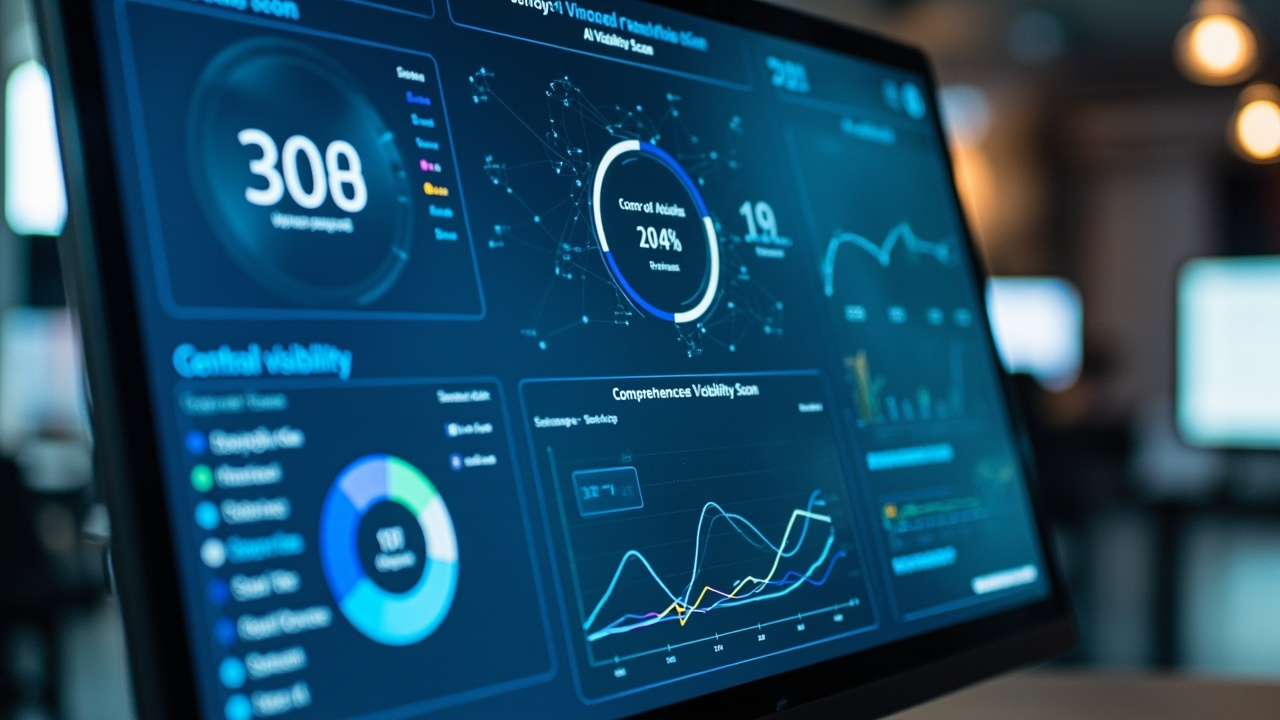
Reporting and Analytics · 2026-09-04How do I know whether AI can actually find and understand my business?You need evidence, not guesswork. Start with an AI visibility scan and the public business knowledge itself: can AI or search systems retrieve the right pages, are the important facts clear, are customer questions covered, and are machine-readable outputs available and consistent? Then separate the signals. Discovery or retrieval shows that an AI system requested content. A visible citation is a stronger but different observation. An identifiable AI refer…
Reporting and Analytics · 2026-07-15How is conversation reporting different from AI visibility reporting?AI visibility reporting looks outward at discovery, retrieval, citations and referrals. Conversation reporting looks inward at the questions people ask the business’s own assistant or knowledge interface, the topics attracting interest and the gaps in the current knowledge. Together they close the loop: one shows how external systems interact with the public layer, while the other shows what real users still want to know.
Use it to improve the knowledge layer. If AI systems repeatedly retrieve a topic, deepen and maintain it. If customers keep asking a question the site cannot answer, publish a better answer. If a citation surfaces an outdated page, correct the source. Reporting is most valuable as a feedback loop between what the business publishes, what machines retrieve and what people ask—not as a vanity dashboard.
Reporting and Analytics · 2026-07-13Can all AI activity be measured?No. AI platforms do not expose every internal retrieval path, user interaction or downstream decision. Some traffic loses referrer information, some models use cached or indexed data, and a brand may be mentioned without generating a visit. That is why OTC reports what its own infrastructure can observe and uses external visibility tests as separate evidence. Gaps in measurement should be acknowledged rather than filled with assumptions.
Reporting and Analytics · 2026-07-12Why separate discovery, retrieval, citation, referral, visit and lead?Because they happen at different stages. Discovery means a system found a resource. Retrieval means it requested useful business content. Citation means a source was shown in an answer. Referral means a browser arrived from an identifiable AI service. A visit or click-through is human activity, and a lead or customer is a commercial outcome. A business can improve one stage without automatically producing the next. Separating them makes the reporting actio…