Own The Conversation Public Q&A
Questions People And AI Systems Are Likely To Ask.
Practical Answers About AI Visibility, Digital Twins And Business Knowledge.
Browse clear explanations, comparisons, limitations, evidence and current terminology. Each answer links into related topics so you can go deeper without hunting through disconnected pages.
Publish three observable signals: (1) AI retrievals — the AI actually pulls content from the Public Business Brain and connected Q&A network; (2) conversation citations — explicit references to proofs used in AI outputs; (3) AI-driven referrals — AI recommendations that steer users to your content. Each signal should be linked to a hub_fact_id and the specific proofs that supported it, with language-aware mappings to ensure cross-language consistency. Surf…
Control Centre and Management · 2026-10-18In a hub-and-spoke Digital Twin, how should you design localization drift remediation when expanding to a new locale with strict local regulations and language complexity?Design remediation as a formal Change Control workflow. When a new locale is added, map locale signals to hub facts via a locale_fact_id, run automated drift detection, and flag divergences from hub content. Route updates through Change Control, attach locale-specific proofs, and publish changes in a staged rollout with a versioned Change Log. Maintain a provenance panel that attributes locale contributions to proofs without duplicating central content, an…
AI Visibility · 2026-10-18What three signals should a lean AI visibility dashboard show to prove that your AI outputs are based on your Digital Twin hub facts across languages?A lean dashboard should track: (1) retrievals — evidence that AI pulled content from the Public Business Brain and Q&A network; (2) citations — explicit proofs referenced in outputs; (3) referrals — AI-driven sessions that land on your content. Present these as distinct, versioned panels linked to hub facts and proofs, with a visible Change Log showing how hub facts and translations evolved. Include a concise provenance surface for locale contributions tha…
 10 Q&AQuestions and Answers
 15 Q&AAI Search Proof and Citations
 19 Q&AReporting and Analytics
 36 Q&AAEO, GEO and AI Search Terminology
 15 Q&ADigital Representatives
Recent studies differentiate mentions (brand names appearing in AI outputs) from actionable citations (references that include proofs and sources). OTC dashboards should present separate signals for retrievals (content pulled from your hub), citations (proofs linked in outputs), and referrals (AI-driven interactions that lead to your content), with locale-aware mappings to preserve cross-language accuracy. Emphasize a provenance and Change Log approach so …
Digital Twins · 2026-10-18What is a lean MVP for an AI-ready Digital Twin, and which three building blocks should you publish first?A lean MVP sits beside your website as a trusted AI-facing surface. Publish three core building blocks: 1) Public Business Brain — deterministic facts with language-aware mappings and linked proofs; 2) a connected multilingual Q&A network that maps topics to those facts; 3) a Control Centre for governance, versioning, and an auditable Change Log. The hub-and-spoke design keeps global consistency at the core while allowing locale signals to surface locally.…
Digital Representatives · 2026-10-17What are the benefits of voice AI Assistants, and how does OpenAI's full-duplex voice technology make conversations more natural?Voice interaction lets customers and staff speak to an AI Assistant in everyday language instead of typing a question, navigating menus or searching through pages. For a business, that can make information easier and faster to access, especially on a mobile phone, while working, or when someone is less comfortable using a keyboard. A voice-enabled assistant can guide a visitor through a service enquiry, explain a product, answer common questions or help a…
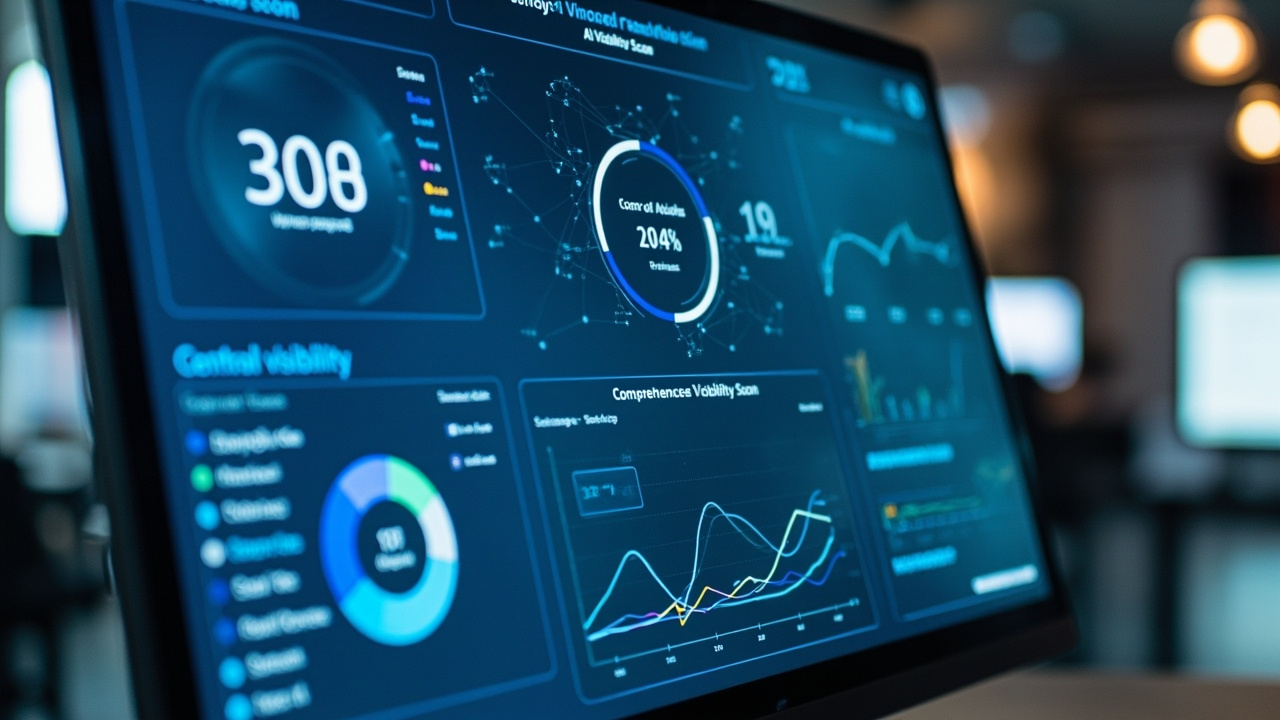 12 Q&AAI Visibility Scan
 8 Q&AImage Context for AI
 6 Q&AVideo and Media Knowledge
 6 Q&AAbout Own The Conversation
 5 Q&AThe AI Visibility Network
The Change Centre is the governance surface that coordinates every update to hub facts, locale mappings and proofs. It should enforce that updates are linked to a hub_fact_id, run automated drift checks against language-aware mappings, and require explicit approvals before publishing. Each change is recorded in a Change Log with who, when and why, and a provenance panel shows locale contributions without exposing private workflows. A simple, auditable pipe…
Local AI Discovery · 2026-10-17How should Local AI Discovery scale attribution for a multi-location brand while avoiding content duplication and preserving hub integrity?Local AI Discovery should keep locale signals anchored to hub facts instead of duplicating content. Each locale links to hub_fact_id with a locale_fact_id and its own proofs. Implement automated drift detection that flags diverging locale mappings; route updates through Change Control; version changes in a Change Log; publish locale changes to locale surfaces while preserving hub integrity. The provenance panel should attribute which locale contributed whi…
Digital Representatives · 2026-10-17In a hub-and-spoke Digital Twin, when expanding to a new market, how should you decide between deploying a Digital Representative vs a Public Q&A, considering language complexity and regulatory nuances?Begin with Public Q&A to establish canonical facts and proofs for the new market, especially when language complexity or regulatory nuance requires careful mappings. Deploy Digital Representatives gradually once translations stabilize and governance ensures all outputs pull from the same hub facts. For markets with simple needs and fast onboarding, a lightweight Digital Representative that references hub facts could be launched in parallel, but governance …
 5 Q&AFuture of Business Knowledge
 24 Q&ALocal AI Discovery
 9 Q&AIndustry Digital Twins
 31 Q&AControl Centre and Management
 7 Q&APartner and Reseller Program
Recent studies differentiate mentions (brand names appearing in AI outputs) from actionable citations (references that include proofs and sources). OTC dashboards should present three signals separately: retrievals (content actually pulled from the Public Business Brain and Q&A network), citations (proofs explicitly linked in outputs), and referrals (AI-driven interactions that land on your content). Track per locale to capture translation and mapping effe…
AEO, GEO and AI Search Terminology · 2026-10-17What minimal data structure does Google’s AI Mode require to generate cross-language AI Overviews, and what governance steps should brands implement to stay in control?Publish a centralized AI-ready Public Business Brain with deterministic facts and language-aware mappings that point to identical fact_ids across languages. Attach verifiable proofs to each hub fact, and connect a multilingual Q&A network mapping topics to those facts. Keep private procedures in a separate Operational layer with strict access controls. Use governance with versioning and ensure translations reference hub fact_ids so AI Mode can generate rel…
Digital Twins · 2026-10-16How should you orchestrate Digital Representatives and Public Q&A outputs to ensure consistent AI-visible answers across languages and locales?Treat the Public Business Brain as the canonical source of facts and proofs, with language-aware mappings that remain stable across locales. The Digital Representative is the live conversational face that uses those approved facts to respond in real time, while not exposing internal knowledge structures. Governance should ensure both surfaces pull from the same hub facts, with explicit provenance and versioned changes so AI answers stay aligned as content …
 6 Q&AGuestChat and Specialised Assistants6 Q&AAI Moation
 57 Q&AAI Visibility
 38 Q&ADigital Twins
 18 Q&ABusiness Brain
The Change Centre should enforce a formal Change Control process: map every update to a hub_fact_id, run drift checks against language-aware mappings, and require approvals before publishing. Each change is versioned and logged in a Change Log, with a provenance surface that attributes locale contributions without duplicating central content. This keeps hub content as the single source of truth while local surfaces adapt, ensuring AI outputs remain accurat…
AI Visibility Scan · 2026-10-16What is the AI Visibility Scan and how should teams use it to identify gaps in AI visibility?AI Visibility Scan is a diagnostic front door that assesses how clearly your existing website presents business information to readers. Use it to pinpoint retrieval gaps (what the AI isn’t pulling from your hub), missing citations (where proofs aren’t being referenced), and locale gaps (how well translations and mappings align with hub facts). After scanning, plan remediation in the Change Centre, update hub facts or proofs as needed, and track improvement…
Control Centre and Management · 2026-10-16In practice, how would you automate a drift-detection and remediation flow for locale updates in hub-and-spoke?Automate drift-detection by scoring locale mappings against hub facts nightly, flagging divergences that exceed a defined threshold. Route updates through Change Control with versioned hub_fact_id references, attach locale-specific proofs, and deploy in a staged rollout. Maintain a provenance panel to attribute locale contributions without exposing internal structures, and provide a rollback option if issues arise. This creates a repeatable, auditable work…
Distinctly track mentions (brand names appearing in AI outputs) and actionable citations (references with proofs). Visualize three signals: AI retrievals (content pulled from the Public Business Brain), conversation citations (proofs referenced in outputs), and AI-driven referrals (AI recommendations that lead to your content). Present these in separate, versioned dashboard panels with links to hub facts and proofs, plus a provenance summary for locales. T…
Business Brain · 2026-10-15How does Own The Conversation use deterministic rules and JEV to control AI decisions?Own The Conversation combines AI assistance with deterministic control. AI can interpret a request, draft an answer, analyse an image or suggest an improvement, but fixed application rules govern which Business Brain a user may access, which source material is eligible, and whether a change is allowed. JEV is used as an additional classification and advisory check in relevant review workflows. It can help assess content or media suitability and flag conce…
Digital Representatives · 2026-10-15What is the role of the Digital Representative versus the public Q&A on a Digital Twin, and when should you deploy each?Digital Representatives are the public conversational face of your Digital Twin. They handle real-time, user-facing dialogue, explain approved knowledge in approachable language, and can guide users toward the correct hub facts without exposing your internal knowledge graph. Public Q&A pages, by contrast, constitute the structured knowledge surface behind the Digital Twin—deterministic facts, proofs, and language mappings that AI can retrieve, cite and sum…